
8 Most Famous Italian Poets
Are you looking for the most famous Italian poets?
Italy boasts a myriad of famous poets, each playing a significant role in shaping the development and evolution of its rich literary tradition.
Italian poets have created a lasting legacy that stretches through time, writing verses that connect with people and leaving a lasting mark on world literature. Their impact isn’t just for a short time but echoes through generations, molding how poetry is expressed and enhancing the cultural heritage of humanity.
Related read: Most Famous Italian Writers
Through their profound contributions, Italian have not only elevated Italian literature but have also made lasting impressions on world literarature.
Let’s have a look at some of the most famous Italian poets of all time.
8 Most Famous Italian Poets

1. Dante Alighieri (c. 1265 – 1321)

Dante Alighieri, renowned for his groundbreaking epic poem, Divine Comedy, influenced countless writers and artists. The journey through Hell, Purgatory, and Heaven, guided by Virgil and Beatrice, explores sin, redemption, love, justice, and human nature in the Italian vernacular – a revolutionary move at the time.
Dante’s profound knowledge of philosophy, theology, politics, and history enriches this masterpiece. Apart from Divine Comedy, Dante’s contributions include The New Life (1295), a satirical take on Florence’s corrupt government; De vulgari eloquentia, advocating the use of Italian in literature; and Convivio, a collection of essays on ethics, aesthetics, politics, and religion.
Dante’s influence on Italian literature is immense. He is considered to be the father of the Italian language and one of the greatest poets of all time. His style of writing inspired many other writers to use rhyme schemes such as terza rima (three-line rhyme) or ottava rima (eight-line rhyme).
2. Ovid (43 BC – AD 17/18)
Ovid left an indelible mark on Latin literature with his masterpieces. His Metamorphoses, a collection of 15 books, weaves captivating tales of mythological transformations, from Narcissus turning into a flower to Pygmalion’s statue becoming a woman and the poignant story of Orpheus and Eurydice.
Ovid showcased his versatility with works spanning elegies, epics, dramas, and didactic poems. Notable pieces include Ars Amatoria, offering guidance on wooing and seduction; Fasti, delving into the Roman calendar and its rituals; and Tristia, three poignant poems expressing his emotions during exile imposed by Emperor Augustus.
Ovid is celebrated for his poetry’s beauty, skill, and originality, employed diverse literary devices, including metaphors, similes, allusions, puns, irony, and humor. His experimentation with forms like hexameter, elegiac couplets, and blank verse showcased his versatility.
Ovid’s poetry transcended ancient Rome, inspiring poets across languages and cultures to craft their versions of his stories. His influence extended to painting, sculpture, music, film, and television.
3. Virgil (70 BC – 19 BC)
Virgil wrote three of the most influential works in Latin literature: the Eclogues, the Georgics, and the Aeneid.
The Eclogues, an anthology of pastoral poems, intricately weave the celebration of nature’s beauty and the harmony of human existence. The Georgics delve into the realms of agriculture and farming, earning the distinction of being early examples of scientific poetry. The Aeneid is an epic poem that recounts the journey of Aeneas, a Trojan hero who escaped the fall of Troy and, after wandering across Europe, became the legendary ancestor of Rome’s founders, Romulus and Remus.
Virgil excelled not only as a poet but also as a statesman and adviser to Roman emperors like Augustus and Tiberius. His passing in 19 BCE, while preparing for a literary festival stirred mourning in Rome and beyond.
4. Petrarch (1304 – 1374)
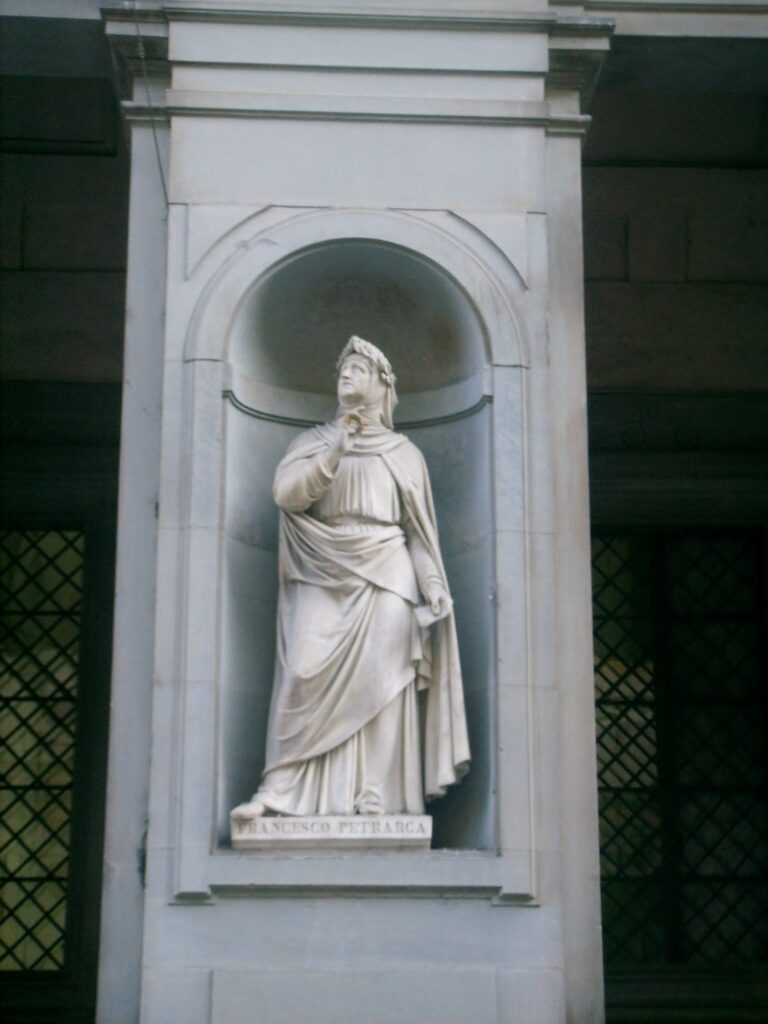
Born Francesco Petrarca on July 20, 1304, Petrarch went on to become a pioneer of the Renaissance movement. He is widely regarded as the father of modern poetry.
Petrarch, a humanist scholar, delved into the humanities, integrating their principles into his life and creations. His works include numerous sonnets expressing affection for Laura, a mysterious woman he encountered in Avignon.
Additionally, Petrarch had a big impact on Italian language and literature. He created new types of poetry with fresh styles.
His life had difficulties, dealing with politics, religious problems, personal issues, and health troubles. The sad parts of Petrarch’s life included losing Laura in 1348 and passing away in 1374.
5. Horace (65 BC – 8 BC)
Horace was a master of Latin lyric poetry and satire who penned odes that celebrated love, friendship, philosophy, and the art of poetry, as well as epistles that criticized the corruption and decadence of his time. His poems are admired for their elegance, wit, and wisdom.
His Ars Poetica, a treatise on the principles and practice of poetry, influenced many later writers.
Horace was born in 65 BC in Venusia, Italy. Just like Virgil, Horace was a friend and adviser of Emperor Augustus.
He passed away in Rome in 8 BC. He was buried in the Mausoleum of Augustus, a monumental tomb built for the first Roman emperor.
6. Ludovico Ariosto (1474 – 1533)
Ludovico Ariosto, a Renaissance poet, gained fame for his renowned work Orlando Furioso. Born in Reggio Emilia, Ariosto initially studied law but found his true passion in poetry and classics. Under Cardinal Ippolito d’Este’s patronage, he began his literary career, later leaving to pursue his own path.
Ariosto’s Orlando Furioso is epic poem that narrates the Charlemagne saga, exploring themes of love, betrayal, magic, and madness. Ariosto’s narrative commentary introduces depth to the work. He also coined the term “humanism,” emphasizing humanity’s strengths over its subordination to God.
Aside from Orlando Furioso, Ariosto produced humorous poems, plays, letters, and lyric poems. He passed away in Ferrara, Italy, in 1533 at the age of 58.
7. Torquato Tasso (1544 – 1595)
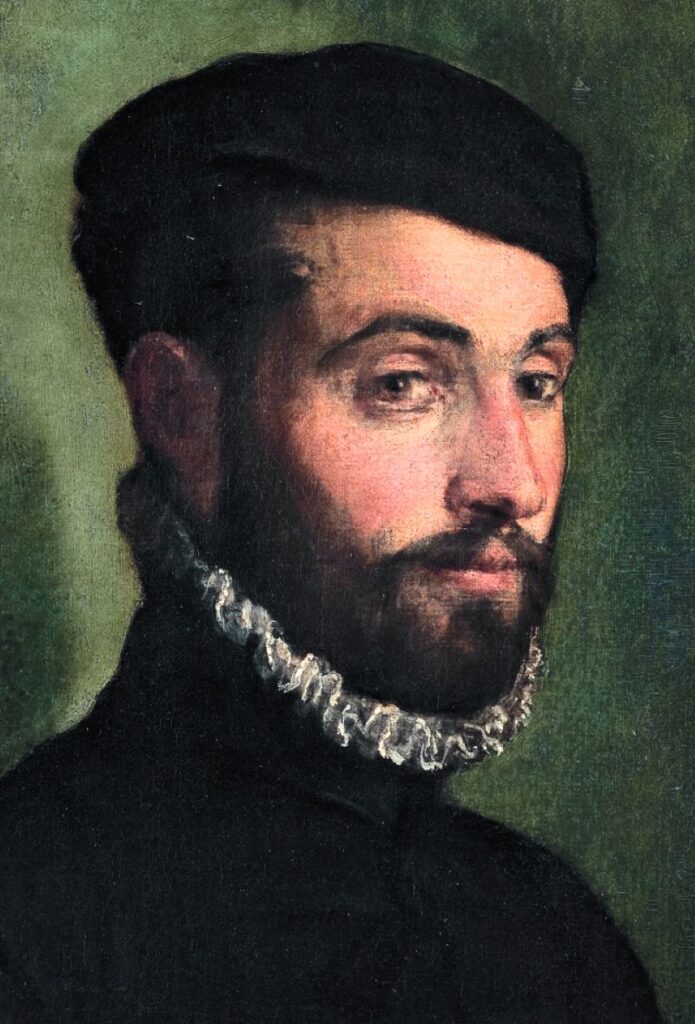
Torquato Tasso, a prominent Italian poet in the 16th century, penned the epic poem “Gerusalemme liberata” depicting the Christian conquest of Jerusalem during the First Crusade. This work, enriched with vivid imagery and emotional depth, mirrors Tasso’s personal struggles, including exile, mental illness, and unrequited love.
Tasso’s poem left an enduring mark on Italian literature and culture, inspiring later works, including Giuseppe Mazzini’s national epic.
Tasso’s legacy extends to the Romantic movement, shaping European literature in the late 18th and early 19th centuries. His untimely death in 1595 preceded a papal coronation, but his influence persists through generations of writers and readers, commemorated at his tomb in the Basilica of Santa Maria Maggiore.


